Basic terms:
OpenAGI – Open Artificial General Intelligence, OAGI, USA,
PeaceAGI – Peace Artificial General Intelligence, PAGI, Russia,
AGI – artificial superintelligence, the AI highest level,
the creation of which the USA “OpenAI” Company is dedicated to.
Contents
I. Structure, principles and grants of OpenAI (OAI) to solve its problems
1.1. OpenAI: nonprofit research company
1.2. OpenAI Structure
1.3. OpenAI Charter.
1.4. The fundamental problem of "superintelligence" is alignment
1.5. Quick Grants for Super Alignment
1.6. Grants to finance various areas of research
1.7. "Totally new approaches"
1.8. Grant FAQs
II. Methodology and organization of PeaceAGI (PAGI) work
2.1. PAGI paradigm: methodology and general characteristics
2.2 Why this paradigm is critical to OAGI alignment and safety?
2.3. PAGI spheral instrumental languages: “Totally new approaches”
2.4. The key cognitive law of safe, peaceful and useful AGI
2.5. PAGI team structure and grant distribution
I. Structure, principles and grants of OpenAI (OAI) to solve its problems
1.1.OpenAI: Nonprofit Research Company.
OpenAI creates Artificial Superintelligence, AGI - Artificial General Intelligence. It is non-profit research company of Elon Mask and others, dedicated to "Creating Safe AGI that Benefits All of Humanity"
«This technology will profoundly transform how we live. There is still time to guide its trajectory, limit abuse, and secure the most broadly beneficial outcomes.»
Anna Makanju. Head of Public Policy at OpenAI.
«AI systems are becoming a part of everyday life. The key is to ensure that these machines are aligned with human intentions and values.»
Mira Murati. Chief Technology Officer at OpenAI.
All the nonprofit research company information of Elon Mask and other OpenAI cofounders is presented on its website: https://openai.com, especially on its blog grant: https://openai.com/blog/supralignment-fast-grants. This site is the only source of information that we quote here without details and additional links.
1.2. OpenAI Structure
OpenAI campaign consists of three teams:
“1. Safety (robustness, and reliability) Systems AGI team, priority team including four sub-teams: Safety Engineering, Safety Research (alignment), Safety Reasoning Research (risks), Human-AI Interaction (policy).
Responsible AI development needs cooperation on safety. We believe that safe AGI cannot be developed in a vacuum.
2. Preparednessteam.
3. Superalignmentteam.
«Building on the many years of our practical alignment work and applied safety efforts, Safety Systems addresses emerging safety issues and develops new fundamental solutions …, to make AI that is beneficial and trustworthy. Safety Systems stays closest to deployment risks while our Superalignment team focuses on aligning superintelligence and our Preparedness team focuses on safety assessments for frontier models.»
«We collaborate with industry leaders and policymakers to ensure that AI systems are developed in a trustworthy manner.»
«Join us. Safety Systems is at the forefront of AI safety research and development. If you're interested in being part of this groundbreaking work, we invite you to apply for our safety engineer, research engineer, and research scientist positions. Come work on making AI systems safe and beneficial for humanity.”
1.3. OpenAI Charter
“Our Charter describes the principles we use to execute on OpenAI’s mission.
This document reflects the strategy we’ve refined over the past two years... The timeline to AGI remains uncertain, but our Charter will guide us in acting in the best interests of humanity. OpenAI’s mission is to ensure that artificial general intelligence (AGI)—by which we mean highly autonomous systems that outperform humans... —benefits all of humanity... To that end, we commit to the following principles:
1. Broadly distributed benefits... AGI’s deployment to the benefit of all, and to avoid enabling uses of AI or AGI that harm humanity or unduly concentrate power. Our primary fiduciary duty is to humanity.
2. Long-term safety. We are concerned about late-stage AGI development becoming a competitive race without time for adequate safety precautions. Therefore, if a value-aligned, safety-conscious project comes close to building AGI before we do, we commit to stop competing with and start assisting this project. We will work out specifics in case-by-case agreements, but a typical triggering condition might be “a better-than-even chance of success in the next two years.”
3. Technical leadership... We believe that AI will have broad societal impact before AGI, and we’ll strive to lead in those areas that are directly aligned with our mission and expertise.
4. Cooperative orientation. We will actively cooperate with other research and policy institutions; we seek to create a global community working together to address AGI’s global challenges. We are committed to providing public goods that help society navigate the path to AGI... increasing the importance of sharing safety, policy, and standards research.”
1.4. The fundamental problem of "superintelligence" is alignment
«We believe superintelligence could arrive within the next 10 years. These AI systems would have vast capabilities—they could be hugely beneficial, but also potentially pose large risks.
Today, we align AI systems to ensure they are safe using reinforcement learning from human feedback (RLHF). However, aligning future superhuman AI systems will pose fundamentally new and qualitatively different technical challenges.
Superhuman AI systems will be capable of complex and creative behaviors that humans cannot fully understand. For example, if a superhuman model generates a million lines of extremely complicated code, humans will not be able to reliably evaluate whether the code is safe or dangerous to execute. Existing alignment techniques like RLHF that rely on human supervision may no longer be sufficient. This leads to the fundamental challenge: how can humans steer and trust AI systems much smarter than them?
This is one of the most important unsolved technical (?) problems in the world. But we think it is solvable with a concerted effort…We think there is an enormous opportunity for the ML research community and individual researchers to make major progress on this problem today.
As part of our Superalignment project, we want to rally the best researchers and engineers in the world to meet this challenge—and we’re especially excited to bring new people into the field.»
1.5. Quick Grants for Super Alignment
«In partnership with Eric Schmidt, we are launching a $10M grants programto support technical research towards ensuring superhuman AI systems are aligned and safe… We are offering $100K–$2M grants for academic labs, nonprofits, and individual researchers…up to 2 years.
No prior experience working on alignment is required; we are actively looking to support researchers who are excited to work on alignment for the first time.
Our application process is simple, and we’ll get back to you within four weeks of applications closing. Apply by February 18.»
1.6. Grants to finance various areas of research
«Weak-to-strong generalization: Humans will be weak supervisors relative to superhuman models. Can we understand and control how strong models generalize from weak supervision?
Interpretability: How can we understand model internals? And can we use this to e.g. build an AI lie detector?
Scalable oversight: How can we use AI systems to assist humans in evaluating the outputs of other AI systems on complex tasks?
Many other research directions, including but not limited to: honesty, chain-of-thought faithfulness, adversarial robustness, evals and testbeds, and more.
For more on the research directions, FAQs, and other details, see our Superalignment Fast Grants page.
We will need new breakthroughs to steer and control AI systems much smarter than us. This is one of the most important unsolved technical problems of our time. But we think it is a solvable machine learning problem. New researchers can make enormous contributions! Please see the blog post for the basic information on this program:https://openai.com/blog/superalignment-fast-grants»
1.7. "Totally new approaches"
«We very much haven’t solved the problem of aligning superhuman AI systems yet, and we expect that we will still need new ideas and approaches. We’d love to hear your new ideas!»
«Safely aligning powerful AI systems is one of the most important unsolved problems for our mission. Techniques like learning from human feedback are helping us get closer, and we are actively researching new techniques to help us fill the gaps.»
«There is currently no known indefinitely scalable solution to the alignment problem.” (Носуществуетнеизвестное – Лев Семашко).
«We want every AGI developer to use the world’s best alignment techniques.»
«Unaligned AGI could pose substantial risks to humanity and solving the AGI alignment problem could be so difficult that it will require all of humanity to work together.»
1.8. Grant FAQs
«Do you have any advice for my grant application?
Concrete, clear, and concise wins the day. We expect to get a lot of applications; you’ll stand out if you can crisply describe your background, what you plan to work on concretely, and why it matters for AGI alignment. Keep your main application short; you can link to or attach longer additional materials.»
«I’m not a machine learning researcher. Can I still apply?
Yes! We think excellent researchers in other fields or engineers with other backgrounds can makecontributions… We’ll generally be looking for evidence of your strong abilities in other quantitative fields.»
«Who evaluates the applications?
Members of the OpenAI Superalignment team, as well as select external reviewers with relevant expertise.»
«How large of a grant can I apply for?
We generally expect to make grants of $100k–$2M, for a term of one to two years. We expect grants to be primarily used for funding compute costs, salaries, students, and human data; please specify the intended use of the funds in the budget section of the application form…In addition to your mainline budget, we generally advise including a budget range (smaller version of the project; more ambitious version of the project). This allows us to e.g. offer partial support.»
«Are grants restricted to the United States?
No—we expect to be able to make grants to individuals and institutions in most other countries as well, barring legal restrictions.»
«I love this idea and I want to help! Can I provide additional funding or other support?
Yes! Thank you for being awesome! If you want to contribute in any way, please email us atsuperalignmentfastgrants@openai.com.»
II. Methodology and organization of PeaceAGI (PAGI) work
2.1. PAGI paradigm: methodology and general characteristics
The spheronics history includes three stages: Indian, Gandhian, 1927-1948; Russian, 1976-2004 and international, GGHA, since 2005 to the present (https://peacefromharmony.org/?cat=ru_c&key=983).The motive of automated information systems, as predecessors and the initial stage of PAGI, has been included in spheronics since 1980. In the PAGI paradigm history several terms of self-identification have been adopted, expressing its different features and attributes, but identical in meaning. The main ones are: “Spherons Global Peace MegaScience” (SGPM), Spheronics, Spheral Approach, Spheral Macrosiology, Spheral Macrostatistics, Spheral Harmonism, Tetrism, Spherism, and others, which are used and explained as necessary, dialectical and historical spheral pluralism/tetrism, integrating the scientific achievements of other “isms” of the past and others that are used and explained as necessary.
The spheronics history as a common theoretical platform of PAGI began since the discovery of the macrosociological “Newtonian law of the spherons’ nonviolence who governs humanity” by Mahatma Gandhi in 1927. Therefore, spheronics, rightfully, was called “Gandhian”. The spherons category has become a conceptual center and the through concept of all theoretical levels of spheronics and PAGI as one of its applications for the entire social spectrum from individuals to whole humanity in the extreme scaling, covering all people from birth to death globally.
The spherons categories reflect the fundamental reality of the humanity universal social structure at all its levels that is verified by world statistics according to a special technique accessible to any competent person with knowledge of arithmetic at any social object, which has their own statistics.
The holistic, macrosociological nature of the Gandhian spherons demanded the creation of its special, spheral macrosociological science of spheronics with its dialectical methodology, with its conceptual linguistic apparatus, its spheral statistics and with its spheral indices. Ultimately, the spheronics development has joined the computer systems development as harbingers of AI since the beginning of the 80s in XX century.
The spheronics history in all the variety of its levels, attributes and tools is presented in more than 1,500 publications, including more than 20 books and hundreds of projects and messages in different languages. Most of them are posted on the GGHA website (https://peacefromharmony.org) on its almost 3000 pages in 16 languages (the main of which, by 90%, are Russian and English) the home page of which creates the banners visual clip row of spheronics different phenomena for the first acquaintance with them.
In the statics, at the holistic macrosociological level, spheronics found the reflection of the humanity social genome, which is preserved in all its historical transformations at all levels in the next structural model:
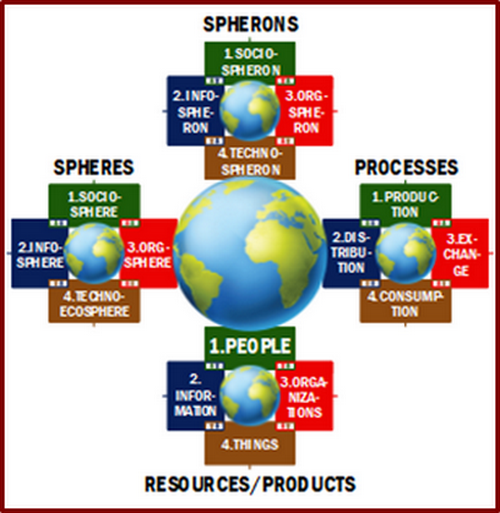
Fig. 1. Societal spheral genome of humanity. Statics
This static, eternal macrosociological structure of humanity in spheronics is verified empirically, logically and statistically in our publications, being, at the same time, quite self-evident but extremely as difficult as possible for the theoretical explanation of its spheral components relationships in their historical dynamics. The sociogenome expresses and applies to every social object, without exception, in full or in a reduced manner, structurally or historically, empirically.
In the humanity dynamics, at the holistic level, spheronics found a visual structural expression in the societal genome next dynamic model, within which its macrosociological laws are revealed:
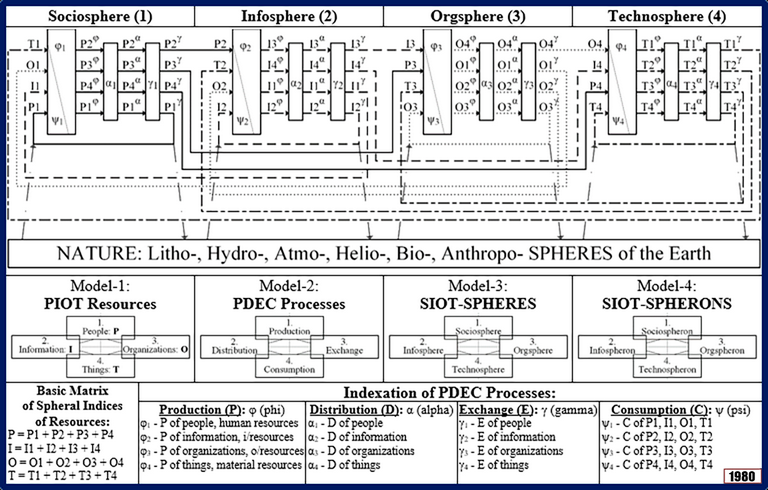
Fig. 2. Societal spheral genome of humanity. Dynamics
The spheronics macrosociological statics and dynamics as the PAGI conceptual platform is presented in the next recent 2023, publication for BRICS+: https://peacefromharmonyd=en_c&class=1160. It will be modified for the OpenAI grant purposes at the stage and its applications and its execution.
The spheronics macrosociology in statics and dynamics has been verified at the empirical level of world statistics that was presented in the 2019 book here: https://peacefromharmony.org/docs/gandhi-nonviolence-of-spherons-gandhica-2019.pdf.
At the holistic philosophical level, spheronics found a visual expression of the spheral vision structure and its thinking in the next tetrad model:
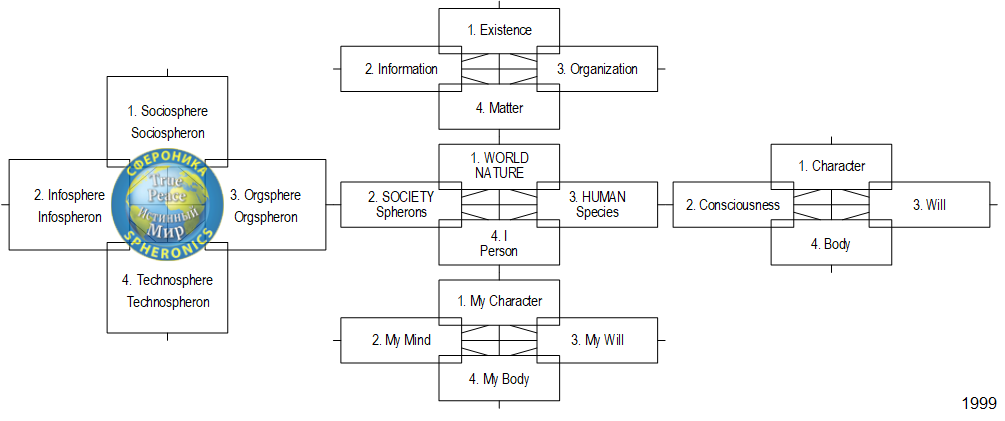
Fig. 3. The spheronics philosophical vision structural scheme
If the models of macrosociological statics and dynamics are verified by the macrostatical tool, the vision model is verified only partially, at the social level, but remains problematic and open to correction and verification in other parts, however, it constitutes the most effective philosophical hypothesis of our time.
The presented three generalizing structural models of spheronics, together with dozens of models detailing them, outline the extreme scale of scientific thinking in spheronics as a single, general level for the operator/human and the IGI superintellect in our paradigm PAGI. It is summarized by a single topological space of four eternal, equally necessary and sufficient spherons of humanity, all social objects of which (individuals, families, enterprises, settlements, cities, countries, industries, corporations, all associations and humanity as a whole), including AGI, are created by spherons and exist only due to their productive reasonable energy, without going beyond the sociogenome (Fig. 1). It limits the space of the artificial in society to only artifacts acceptable to the sociogenome. This means that all social nature from its beginning to its end, focused in its eternal sociogenome, does not go beyond its permissible boundaries, and it is nothing more than the spherons eternal topology, the center of which is their harmony, as the social “only true objective reality” in Poincaré words. The spherons harmony in their infinite social space topology constitutes the ultimate constant of social nature since its beginning to its end that is common, natural standard to humans and any machine “superintelligence”. The spherons social harmony scientific knowledge prevents, or ensures a peaceful, reasonable resolution of all conflicts in society at all its levels from individs to humanity that determines the peaceful nature and purpose of the PAGI paradigm.
Statistically and mathematically, the sociogenome and its spherons harmony are expressed by the spheral indices fractal normative matrices of size 4x4n, where “n” is an infinite series of natural numbers. To express deviations of spheral indices from the sociogenome normative matrices, a series of negative numbers is used, and to express their various reductions of different scales, a series of fractional numbers is used, etc. They quantitatively express the spherons social topology in all its diversity and infinity, the calculation and comprehension of which is impossible without PAGI.
This is the PAGI paradigm general characteristics for its synergy with OAGI and others.
2.2 Why this paradigm is critical to OAGI alignment and safety?
The PAGI paradigm scientific models act in it as its common denominator, i.e. a single language, standard and scale for the intellectual space of thinking operations at both a person/operator and any AGI. only within their limits are they both, a person and a machine, remain in thinking true, peaceful, secured verification, deserving mutual trust, and therefore safe and useful for the humanity benefit. Within the framework of fundamental social and cognitive boundaries scientifically known by human, he/she frees himself from the role of an axiomatically less weak agent of thinking than the AGI “superintellect” and puts it at his, objectively and scientifically higher level of holistic thinking. The AGI is not able to go beyond these models boundaries according to its design and therefore cannot create existential risks for person and society. Similar general AGI design initially ensures its fundamental safety but does not remove it on a functional scale of sector risks. A person and machine interact on the well-known principle: "Render therefore unto Caesar the things which are Caesar's; and unto God the things that are God's." (Math. 22,21), which is broadcast in this refraction as follows: “The fundamental structures and substance must be left to human, and to the machine their infinite scale and details inaccessible to a person.”
At this strategic level, the problem of their “superalightment-1” is simply removed, reset and transferred to the level of private, tactical strategies of functional “alignment-2”. on it, it remains in two other, no less important strategies of mutual ML: the machine learns from a person with weaknesses, mistakes and limitations of his negative and false thinking, so as not to repeat them, because they lead society to crises, depression and self-destruction, and human learns from the machine by the ways to prevent them and similar.
In these strategies, the OAGI teams have accumulated an invaluable empirical experience that will be mastered and integrated by our PAGI paradigm. on the other hand, our paradigm offers for OAGI the spheronics fundamental theoretical platform with its instruments to solve principally its safety problems and alignment. The PAGI extreme holistic scale, its constant structure and the societal genome eternal substance at all levels from an individual to humanity bring out any AGI on their constructive platform from the zone of existential wrong decisions and risks but no more. The PAGI similar possibility is the powerful, spheral potential of structural synergy, convergence and mutual integration of two complementary versions of AGI, in which the OAGI paradigm has no less significant potential of segmental and functional solutions.
We assume that such advantages and approaches of our paradigm, together with the above and below, will be adequate, attractive and very effective for the breakthrough of another paradigm in solving security problems, alignment, scaling, standards and others that are still insoluble in it. All of them, as we think, are critical for synergy, convergence and mutual integration of our paradigms that determines the necessary of our cooperation. As its authors emphasize, in this case “we commit to stop competing with and start assisting this project” and cooperate. We expect it.
Because of our capabilities and the Grants give intentions we real hope to get the desired grant from them and begin intensive working cooperation with them in the next two years.
2.3. PAGI spheral instrumental languages: “Totally new approaches”
For more than half a century of the spheronics research and development, three instrumental, spheral in the general structure of innovative global languages have been created in it:
1. The conceptual language of the spheral Macrosociology, presented in hundreds of articles and dozens of books since 1970, is the most briefly (10 pp.) and full in the project for BRICS+, but so far only in Russian here: https://peacefromharmony.org/?cat=ru_c&key=1051. It is concentrated in two models of a sociogenome in statics and dynamics in figures 1 and 2 above.
2. The qalimetric language of spheral Macrostatistics, or global statistics, GlobStat has been developed and tested since 1980, the examples of which are presented in their first publication in the book: “Spheral Approach. Philosophy, Democracy, Market, Man. Methodology, Conception, Projections", SPb, 1992, p. 368. In English translation: “L. M. Semashko. The Spheral Approach," Saint Petersburg. 1993. P.320: https://peacefromharmony.org/docs/leo-semashko-spheral-approach-1993.pdf (published with abbreviations and additions of 1993).
The most complete presentation and justification of the spheral Macrostatistics in the matrix fractal structure from infinite size is presented in a special book of 2019, under the short name “Gandhica” in four languages here:
https://peacefromharmony.org/?cat=en_c&key=848.
The latest generalization of the spheral statistics examples in 2023 is presented in our recent work, in section 4 on 2 pages: “Leo Semashko, Olga Kashina. Spheronics: Artificial Intelligence of Global Statistics and Russian Leadership in the "Peace Race". January 2023. 25p.: https://peacefromharmony.org/?cat=en_c&key=1109. Their other generalization is presented in the PAGI startup on the 15 pages for the “Innovation Fund” in Russian: https://peacefromharmony.org/docs/Заявка_Стартап_Утвержденный_С1ИИ-300867-3_Соткликом_05-02-23.pdf.
3. The visual language of the spheral structural modeling, accompanying the first two languages, has a long-standing philosophical substantiation and is illustrated in almost every project, book or article by the GGHA in appropriate visual models and schemes.
4. Based on the three named spheronics languages, one of the known ones will be found for PAGI or a special programming language will be created. It will make the possibilities and advantages of spheral languages available for AGI on a variety of electronic devices from smartphones, tablets of peacemaking games and computers to AGI extreme scale. To complete the qualimetric statistical language and to develop a special programming language in cooperation with OAGI, a requested grant is required.
The PAGI general artificial spheral languages make up an additional basis for solving all the OAGI problems, including the main ones - security and alignment. They normalize the natural language and greatly simplify its qualimetric version for transformation into programming language. But they require, first of all, for developers and operators of AGI the intensive learning in these languages in the educational course of at least 1-2 months for specialists with the higher education of a bachelor or master. “First you need to train operators, and then the AGI” is the PAGI main principle! For working purposes, this course can be reduced to 1-2 weeks, which is prepared for the PAGI team.
2.4. The key cognitive law of safe, peaceful and useful AGI
Heraclitus long distinguished between intelligence and knowledge, arguing that “much knowledge does not teach intelligence.” Machine knowledge of endless data will never teach intelligence to a machine or a person. Man is not given the ability to know infinite data, but he is given the ability to think and generalize them into small eternal and constant structures that organize, order, subordinate and control all sets of infinite phenomena and infinite data about them. Man creates machines not in order to make them overlords and become their slaves but in order to share functions with the machine according to Plato’s principle of justice: “To each his own,” or something similar: “To Caesar - Caesar’s, to God - God’s.”
Let a machine teach a person and help him master the infinity of data, but only a person can teach a machine to know the structures, substances and laws of its organization in different spheres and segments of natural and social reality. For example, there is an infinite number of chemical molecules, the knowledge of which is inaccessible to man, but he masters it through knowledge of a higher, holistic order, through knowledge of the small “Periodic Table of Chemical Elements by D.I. Mendeleev". Similar for society. Knowledge of its elements infinite number is inaccessible to human, but in the spheronics macrosociological science he masters it through knowledge of a higher, holistic and transdisciplinary order, through knowledge of the societal genome in the structure of its 16 eternal and universal spheral constants of each social object from any individual to humanity: Figure 1 above.
Therefore, in order to create a safe, peaceful and useful AGI for humanity, “standard AGI” for all times, its creators and operators need, FIRST OF ALL, to study and master holistic, true and verifiable macrosociological spheronics and all its instrumental languages. The primary need of this knowledge for the AGI creators is its key cognitive law. This is an inexorable cognitive, philosophical law of the AGI.
2.5. PAGI team structure and grant distribution
We predict to receive a grant of $2 M for 2 years from the OAGI team for briefly defined above its works. For their performance, we will create a variable in number and functions of an international team within 20-40 specialists on our GGHA model as the first volunteer “Academy of Global Peace Science”, which has been working for almost 19 years since February 15, 2005 (https://peacefromharmony.org/?cat=ru_d).
Our team requires, in addition to the GGHA experienced members, young professional specialists, therefore, four universities from four countries will be invited as its base: Russia, India, Pakistan and Slovenia. The selection and approval of the base universities in them will be implemented before February 1 that must be recorded in an “Agreement of Intent” between the GGHA representative in the country and the leader of the national University.
The PAGI team specialists are divided into permanent on 2 years, and temporary.
Permanent specialists:
1.Project managers, 4-6,
2.Macrosociologists, 2-4,
3.Macrostatisticians, 2-4,
4.Programmers, 4-6,
5.Computers-IT specialists, 4-6,
6.Mathematics, 2-4,
Temporary specialists:
7.Philosophers, 2,
8.Macro economists, 2-4,
9.Financiers, 2-4,
10.Psychologists, 2,
11.Historians, 2,
12.Lawyers, 2,
13.Political scientists, 2,
14.Demographers, 2,
15.Journalists, publicists, 2,
16.Poets, 2,
17.Artists-designers, 2
The alleged project managers and teams on countries.
1. In Russia: Leo Semashko, with the Russian team invited members: Valeriya Malomuzh, Vera Popovich, Olga Kashina, Nina Yudina, Julia Budnikova, Ivan Ivanov, Vyacheslav Bragin, and others.
2. In India: Hasina Parvin, with the Indian team invited members: Anam Kumar, Ashokchakravarthy Tholana, Pravat Dhal, Asha Mukherjee, Ananta Giri, and others.
3. In Pakistan: Noor Larik, with the Pakistani team invited members: Rashida Bukhari, Zia-Ul-Islam, Umer Zia, Mansour Khan, Saqlain Raza, and others.
4. In Slovenia: Matjaž Mulej, with the Slovenian team invited members: Anita Hrast and others.
Other GGHA members, who can join to national team at its invitation:
From South Africa: Ela Gandhi, Mahatma Gandhi granddaughter,
From China: Rosa Dalmiglio,
From Serbia: Slavica Pejović,
From Rwanda: Heli Habyarimana,
From Greece: Takis Ioannidis,
From Ghana: Steve Amoah,
From Nigeria: Ayo Aola Amale,
From Nepal: Bishnu Pathak,
From Germany: Helga LaRouche, William Engdahl,
From s/Ireland: Mairead Corrigan,
From Britain: Rodney Atkinson, Kenneth Leslie,
From the USA: Rudolf Siebert, Matt Meyer, Michael Brenner,
Of the 38 invitations from 16 countries according to the list, only those who confirm the possibility and desire to participate in the GGHA work team with a public response for the PAGI entire team over the next week until January 20 inclusive will remain in it. Participation in the PAGI team is incompatible with silence that can mean only one thing - a conscious refusal to work in our team, whose activity is possible only in public communication of all its members. Therefore, we must begin by publicly consents to participate in it, and silence will only be a refusal.
The Grant distribution of $2 M dollars, when and if we get it in this size. We intend to divide it equally between the PAGI four teams but taking into account the specialists number as well as the quality and volume of grant work, which the team undertakes to perform on time. For specialist’s payment, we assume the following norms that we will discuss and approve later.
Minimum monthly wage: $1 thousand.
Standard for all wages: $2 thousand.
The highest target and temporary wages for especially important specialists - programmers and mathematicians: up to $5 thousand.
If Russia will be excluded from the grant due to the USA sanctions, then the grant will be distributed between three other national teams of PAGI, which will include the Russian researchers according to special agreements after the OAGI decision.
These theses make up a preliminary sketch of our grant application, which will be compiled and signed by the PAGI national teams leaders until February 10 and sent until February 18, 2024.
The project was prepared by
Dr. Leo Semashko,
Philosopher, sociologist and peacemaker from the Gandhian spherons harmony,
GGHA Founder (2005) and Honorary President,
https://peacefromharmony.org/?cat=en_c&key=253,
SaintPetersburg, Russia,
January 13, 2024
--------------------------------------------------------
